

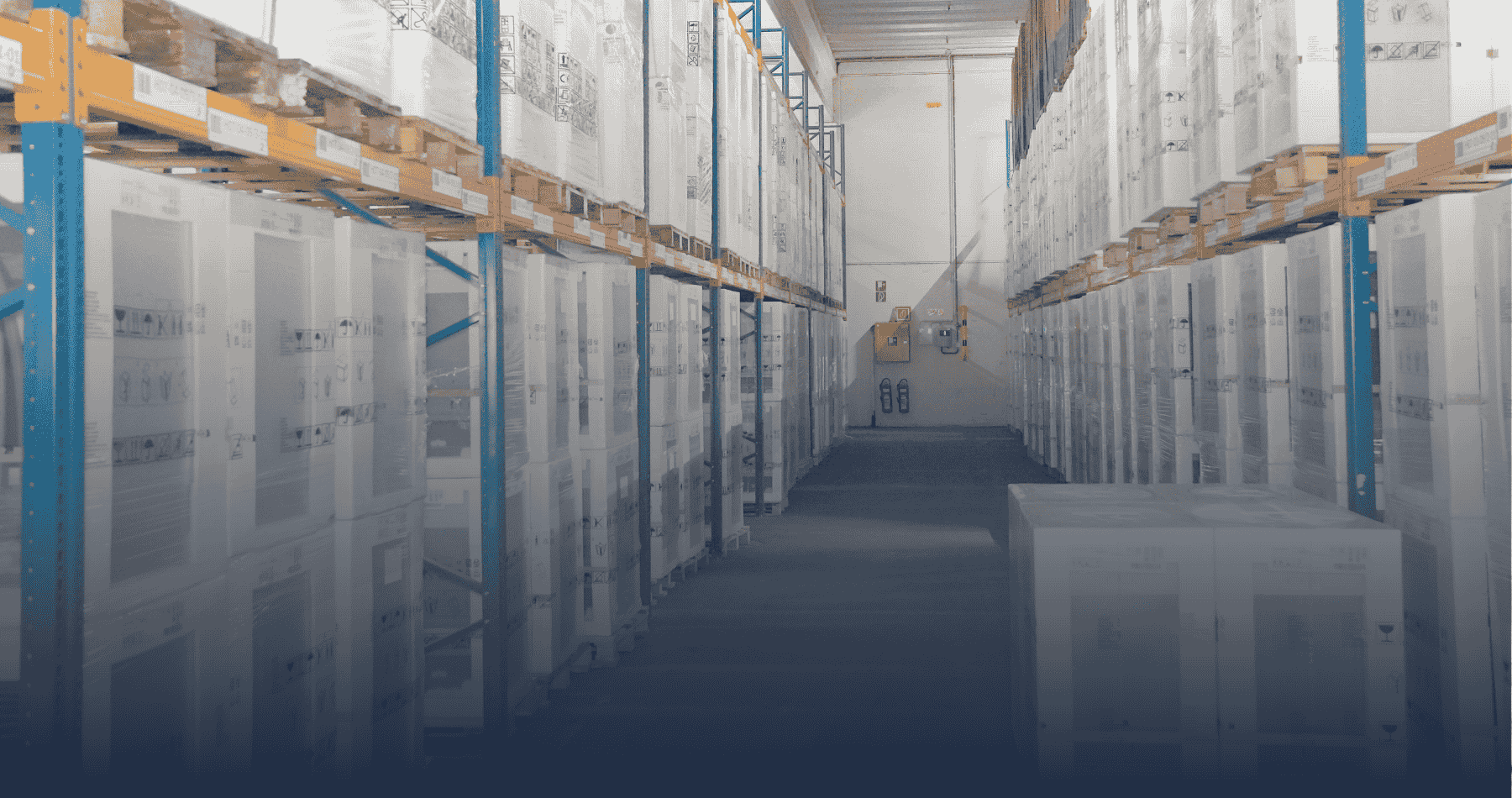
As a retailer, you are faced with the decision every day: Which goods offer my customers the best added value with attractive margins? A-goods are the first choice for all those who focus on quality, legal certainty and customer satisfaction. In this comprehensive guide, you will learn everything you need to know about purchasing A-goods - from the definition and sources of supply to successful marketing. Regardless of whether you are just starting out in the trade or want to optimize your existing range: Here you will find practical information to help you make the right decisions.
Table of contents
- What is A-goods? Definition and quality features
- Why buy A-goods? The 7 most important advantages for retailers
- Buying A-goods: How to find the right suppliers
- A-goods vs. B-goods: Which class of goods is worthwhile for you?
- Price calculation for A-goods purchasing: how to calculate correctly
- Legal basis for A-goods trading
- Storage and quality assurance of A-goods
- Buy A-goods with elvinci: Your advantages at a glance
- Successful sales strategies for A-goods
- Buying A-grade goods: Common mistakes and how to avoid them
- Frequently asked questions about A-goods (FAQ)
- Conclusion: buying A-grade goods as the foundation for successful trading
What is A-goods? Definition and quality features
A-goods are brand-new products in perfect condition that are sold directly by the manufacturer or via authorized distribution channels. These goods have never been used, tested or displayed and are in their original sealed packaging. For retailers, A-goods are the basis of reputable trade, as customers receive a product that exactly meets the manufacturer's quality standards.
The 5 key features of genuine A-grade goods
If you buy A-grade goods, the following characteristics must be fulfilled:
1. factory-new condition without signs of use The product has not been used or tested after manufacture. There are no scratches, fingerprints or other marks on the product. All protective films and transportation locks are still present.
2. original sealed packaging The manufacturer's packaging is completely intact and unopened. Security seals, adhesive strips and seals are undamaged. This ensures that no one has unpacked or checked the product before you.
3. complete accessories and documentation All accessories, instructions, warranty cards and other inserts are included in full. In the case of electronic items, this includes charging cables, adapters, manuals and warranty documents, for example.
4. full warranty and guarantee claims As a dealer, you can offer your customers the full statutory warranty of 24 months. In addition, all manufacturer warranties apply without restriction from the date of purchase.
5. fulfillment of all manufacturer specifications The product corresponds 100% to the manufacturer's technical and quality specifications. There are no deviations in material, workmanship or functionality.
A-goods vs. B-goods vs. C-goods: the key differences
In order to make the right purchasing decision as a retailer, it is important to know the differences between the product classes:
| Merkmal | A-Ware | B-Ware | C-Ware |
|---|---|---|---|
| Zustand | Fabrikneu, makellos | Kleinere Mängel, geöffnete Verpackung | Deutliche Gebrauchsspuren |
| Verpackung | Original verschlossen | Oft geöffnet oder beschädigt | Meist ohne Originalverpackung |
| Verkaufspreis | 80-100% der UVP | 30-70% der UVP | 10-40% der UVP |
| Händlermarge | 20-40% | 40-60% | 30-50% |
| Gewährleistung | 24 Monate voll | 12-24 Monate (oft eingeschränkt) | 12 Monate (oft Gewährleistungsausschluss |
| Herstellergarantie | Voll gültig | Meist ungültig | Keine |
| Retourenquote | 2-5% | 8-15% | 15-25% |
| Verkaufsgeschwindigkeit | Schnell | Mittel bis langsam | Langsam |
| Zielgruppe | Qualitätsbewusste Kunden | Preissensible Käufer | Schnäppchenjäger, Bastler |
Typical product categories for A-goods in wholesale
A-goods are offered in almost all retail sectors. The following categories are particularly common:
Electronics and household appliances: Smartphones, laptops, tablets, televisions, washing machines, coffee machines and other electrical appliances are sold almost exclusively as A-grade goods. Customers expect new goods and are not prepared to compromise.
Clothing and shoes: Fashion from current collections purchased directly from the manufacturer or via wholesalers. Textiles should be unworn and have the original label.
Furniture and furnishings: New pieces of furniture in their original packaging that are assembled at the customer's premises. Decorative items and home textiles also often fall into this category.
Tools and machines: Professional tools and construction machinery are preferably purchased as A-grade goods, as safety and warranty are particularly important here.
Toys and sporting goods: Children's toys and sports equipment should always be brand new for safety reasons. A-grade goods are the standard here.
Expert tip
When you buy A-goods, you benefit from maximum planning security and customer satisfaction. The decision between A-goods and other product categories depends on your target group and positioning. A-goods are indispensable for building a reputable retailer image.
Why buy A-goods? The 7 most important advantages for retailers

Trading in A-goods offers you as a retailer numerous advantages that have a direct impact on your business success. Here are the most important reasons why A-goods form the basis of a successful trading business.
Highest product quality = satisfied customers
With A-goods, you offer your customers a product that meets the highest quality standards. There are no compromises in terms of material, workmanship or functionality. Your customers receive exactly what they expect - a perfect product with no defects. This certainty of expectation leads to high customer satisfaction and positive reviews, which in turn attract new customers.
Full warranty and manufacturer's guarantee
With A-goods, you don't have to worry about previous damage or limited warranty claims. You can offer your customers the full statutory warranty period of 24 months. In addition, all manufacturer warranties apply without restriction. This legal certainty minimizes your risk considerably and gives your customers the reassuring feeling of being covered in the event of problems.
Minimal return rates and lower service costs
If you buy and sell A goods, your returns rate will drop significantly. Customers receive flawless products in the expected quality, making complaints and returns rare. This not only saves you the direct costs of returns and shipping, but also time and effort in customer service. Your team can concentrate on productive activities instead of complaint management.
Better calculability for your business
A-goods offer the highest level of commercial planning security. You know exactly the value of your goods and can calculate precisely. There are no unexpected costs for reconditioning, repairs or quality checks. Your stock levels remain constant in value and you can plan your liquidity better. This predictability is a huge advantage, especially for smaller retailers.
Strong brand image and customer loyalty
Retailers who consistently offer A-goods build up a level of trust that ensures long-term success. Customers know that they will always receive flawless new goods from you. This reliability creates customer loyalty and leads to recommendations. You position yourself as a reputable, quality-conscious supplier - a position that also justifies higher prices.
Faster sales cycles
A goods generally sell much faster than B or C goods. The target group is larger, as quality-conscious customers are prepared to pay the regular price. You don't have to wait for bargain hunters or run aggressive discount campaigns. This accelerates your capital turnover and improves your liquidity.
Legal certainty in retail
With A-goods, you are on legally safe ground. There are no gray areas when it comes to labeling and you do not have to inform customers about defects. The clear framework conditions protect you from legal disputes and warnings. This security is worth its weight in gold, especially for retailers who sell online.
Buying A-goods: How to find the right suppliers
Purchasing A-grade goods requires careful planning and selecting the right sources. Many retailers initially ask themselves why they cannot buy directly from the manufacturer. The answer lies in the structural conditions of the supply chains.
Why wholesalers instead of direct purchase from the manufacturer?
Most manufacturers produce in very large quantities and rely on established distribution structures. For the average retailer, direct relationships with manufacturers are difficult for several reasons:
Enormous minimum purchase quantities: Manufacturers often demand entire truckloads or containers per order. These quantities far exceed the financial and logistical capabilities of most retailers. A single container can contain goods worth between 50,000 and 200,000 euros.
Distribution agreements and territorial restrictions: Many manufacturers have exclusive contracts with regional distributors. Certain products may only be sold in defined markets or via certain channels. Additional restrictions may apply to online retailers.
High demands on business relationships: Manufacturers often require long-standing business relationships, high credit ratings and detailed business plans. These hurdles are almost impossible to overcome for newly founded companies or smaller retailers.
Missing services: Manufacturers generally do not offer warehousing, drop shipping or flexible payment terms for small quantities.
This is precisely where wholesalers take on the important role of intermediary. They purchase large quantities from the manufacturer and break them down into retailer-friendly units. In this way, they also give medium-sized companies access to A-grade goods at reasonable conditions.
The 3 best sources for A-goods in the B2B sector
If you want to buy A-goods, there are various sources of supply available to you. Each has its specific advantages and disadvantages.
| Bezugsquelle | Vorteile | Nachteile | Geeignet für |
|---|---|---|---|
| Etablierte Großhändler | Zuverlässig, breites Sortiment, zusätzliche Services | Höhere Preise als Direktbezug | Mittelständische Händler, Einsteiger |
| Fachgroßhändler | Spezialisierung, Expertise, bessere Konditionen in der Nische | Begrenzte Produktauswahl | Spezialisierte Händler in einer Branche |
| Direkte Herstellerpartnerschaft | Beste Margen, direkter Kontakt | Sehr hohe Mindestmengen, hohe Anforderungen | Große Händler mit hohem Volumen |
Established wholesalers and distributors
Traditional wholesalers are the most common source of A-goods. They have long-standing relationships with manufacturers and offer a wide range of products. The advantages are reliability, availability and often additional services such as warehousing and fast delivery. The minimum quantities are significantly lower than with the manufacturer and the payment terms are more flexible. However, the prices are higher than with direct procurement, as the wholesaler adds his margin.
Specialized wholesalers
For certain industries, there are specialized wholesalers that focus on specific product categories - such as electronics, fashion or toys. These specialists often offer better conditions and in-depth expertise in their niche. If you focus on one product category, you can benefit from their expertise and networks.
Direct manufacturer partnerships (for large retailers)
If your business is growing and you can consistently purchase large quantities, it is worth establishing direct manufacturer relationships. The margins are highest here, but you need the corresponding capital and professional structures.
What you need to look out for when selecting a supplier
Choosing the right supplier is crucial to your success. Check the following criteria:
Seriousness and references: Research reviews, ask for references and check how long the supplier has been on the market. Reputable wholesalers have transparent terms and conditions and respond quickly to inquiries.
Product quality and authenticity: Insist on proof that the goods are genuine A-grade goods from authorized sources. Beware of suspiciously cheap offers - these could be counterfeits or gray imports.
Contractual agreements: Clarify in writing: delivery times, quality standards, return conditions in the event of defects, payment terms and liability in the event of delays or quality problems.
Logistics and delivery reliability: Check how quickly and reliably the wholesaler delivers. Can you also receive smaller repeat orders quickly? Is there stock in Germany or does everything have to be imported from abroad?
Long-term cooperation: You get the best conditions with long-term business relationships. Build trust, pay reliably and communicate regularly. Many wholesalers offer regular customers better prices and preferential treatment.
Expert tip from purchasing professionals: Test new suppliers with smaller orders first. Check the delivery time, packaging quality and product condition before ordering larger quantities. Build up a network of 2-3 reliable main suppliers and 1-2 alternative sources - this will allow you to remain flexible and avoid supply bottlenecks.
Purchasing conditions: Minimum quantities, payment terms and discounts
The conditions for purchasing A-goods vary depending on the wholesaler and sector. Here are typical framework conditions:
Minimum purchase quantities: Most wholesalers require minimum order values of between 500 and 5,000 euros. For some products, you also have to purchase minimum quantities per item - for example 5 or 10 pieces.
Volume discounts: The larger your order, the better the conditions. Typically, you will receive graduated discounts, whereby the discount amount varies greatly and depends on the product, industry and negotiating position. These discounts can improve your margin.
Terms of payment: As a new customer, you usually have to pay in advance or at very short notice. Payment terms of 14 or 28 days are only granted after successful cooperation. Larger retailers with a good credit rating can also negotiate payment terms of 60 days, which significantly improves liquidity.
Discounts and bonuses: Some wholesalers grant discounts for fast payment (e.g. 2% for payment within 7 days) or annual bonuses for reaching certain sales thresholds.
A-goods vs. B-goods: Which class of goods is worthwhile for you?
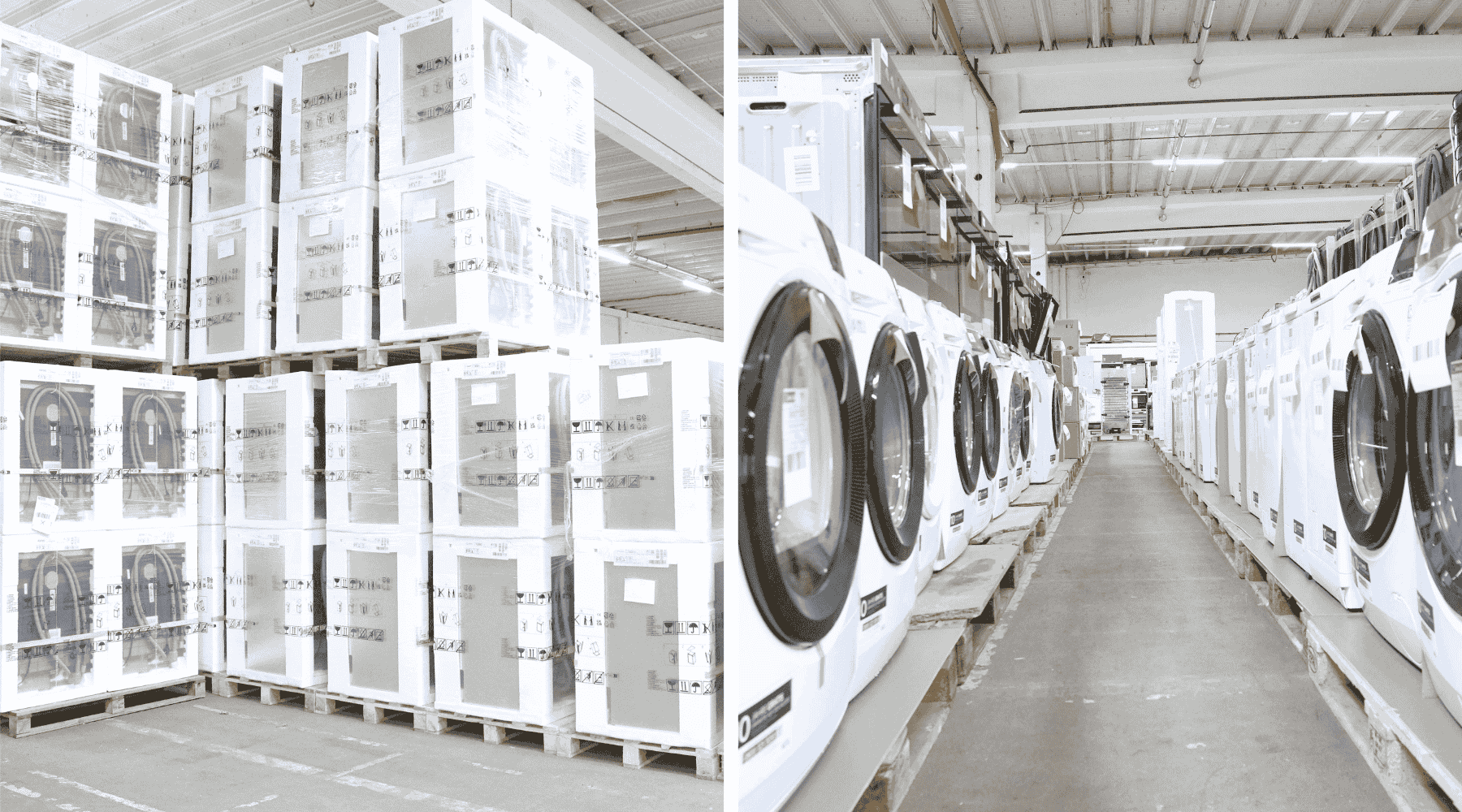
The decision between A-goods and B-goods is a strategic question that depends on your positioning, your target group and your resources. Both classes of goods have their place in retail - the trick is to choose the right one for your business model.
Direct comparison: quality, price and margins
The following table shows you the most important differences at a glance:
| Faktor | A-Ware | B-Ware |
|---|---|---|
| Zustand | Fabrikneu, keine Mängel | Kleinere optische/ funktionale Mängel |
| Verpackung | Original verschlossen | Oft geöffnet oder beschädigt |
| Einkaufspreis | 50-70% der UVP | 20-50% der UVP |
| Verkaufspreis | 80-100% der UVP | 30-70% der UVP |
| Marge | 20-40% | 40-60% |
| Gewährleistung | 24 Monate + Herstellergarantie | Oft nur 12 Monate, keine Herstellergarantie |
| Verkaufsgeschwindigkeit | Schnell, konstant | Langsam, schwankend |
| Retourenquote | 2-5% | 8-15% |
| Aufwand | Gering | Hoch (Prüfung, Beschreibung) |
| Zielgruppe | Qualitätsbewusst, breites Publikum | Preissensibel, Schnäppchenjäger |
| Kapitalbindung | Kurz (schneller Verkauf) | Lang (längere Lagerzeit) |
For whom is A-goods worthwhile?
A-goods are the right choice if the following points apply to you:
You operate a regular retail business: Whether online or stationary - if you want to position yourself as a reputable retailer, A-goods are your basis. Customers expect new goods in regular stores, and you fulfill this expectation.
Your target group is quality-conscious: Customers who value branded products, guarantees and impeccable quality do not buy B goods. With A-goods, you can appeal to this target group with high purchasing power.
You want to build your brand image: Trust and reputation are built on reliability. If you consistently offer A-grade goods, you will develop a reputation as a reputable supplier.
You want to minimize effort: A-goods do not require time-consuming quality checks, less customer service and have lower return rates. This saves time and resources.
They sell high-priced branded products: When it comes to electronics, brand-name shoes or premium household appliances, customers expect A goods. B goods hardly work here.
Expert tip: Start as a beginner with A-goods. You will learn the basics of trading without the complexity of quality checks and elaborate product descriptions. As soon as you have stable processes, you can test B goods as a supplement.
When should you consider B-goods?
B-goods can be useful if:
you operate an outlet or specialty store: Your customers come specifically to find bargains and accept minor defects.
you have an aggressively priced online platform: If your business model relies on the lowest prices and your target group is extremely price-sensitive, B-goods may be the right choice.
you have expertise in reprocessing: If you can rectify minor defects yourself (e.g. cleaning, new packaging, repairs), you will significantly increase the margin on B-goods.
You have to create liquidity through higher margins: In the start-up phase, B-goods can help you become profitable more quickly - albeit with a higher risk.
Combination of both product classes as a successful strategy
Many successful retailers strategically combine A-goods and B-goods:
A-goods as the main range creates trust and attracts quality-conscious customers. B-goods as a supplement appeals to price-sensitive buyers and can generate additional margins. A clear separation is important: always label B goods clearly and do not mix them with A goods. Customers must immediately recognize what they are buying.
An example: In your online store, you offer high-quality branded electronics as A-goods at regular prices. You also have a separate "Offers" or "B-goods" category in which you offer returns and display items with a clear description of defects at a lower price. This allows you to maximize your target group and your sales.
Price calculation for A-goods purchasing: how to calculate correctly
The right price calculation is crucial to whether your trade in A-goods is profitable. Many beginners underestimate the costs beyond the pure purchase price and calculate too tightly. Here you will learn how to take all factors into account and achieve realistic margins.
Typical purchase prices and margin structures
If you buy A goods, the purchase prices from the wholesaler are typically 50-70% of the manufacturer's recommended retail price (RRP). This range varies depending on the product category and negotiating skills:
| Produktkategorie | Einkaufspreis (% der UVP) | Realistische Verkaufspreise | Typische Marge |
|---|---|---|---|
| Elektronik & Technik | 60-70% | 80-95% der UVP | 20-30% |
| Mode & Schuhe | 40-60% | 70-100% der UVP | 30-50% |
| Haushaltsgeräte | 55-65% | 80-95% der UVP | 25-35% |
| Spielwaren | 45-60% | 75-100% der UVP | 30-45% |
| Werkzeuge & Baumarkt | 50-65% | 80-100% der UVP | 25-40% |
| Möbel & Einrichtung | 45-60% | 70-100% der UVP | 30-50% |
Important: These values are guidelines. Your actual conditions depend on your negotiating position, purchase quantities and current market conditions.
Practical example: Complete calculation from purchasing to sales
Let's take a concrete example: You buy a coffee machine with an RRP of 200 euros and optimize your processes right from the start.
Optimized calculation:
| Kostenposition | Betrag | Optimierung |
|---|---|---|
| Einkaufspreis | 110 € | Mengenrabatt genutzt |
| Versandkosten vom Großhändler | 2 € | Sammelbestellung |
| Lagerkosten (2 Monate) | 6 € | Effiziente Lagerhaltung |
| Plattformgebühren (eigener Shop) | 6 € | Nur 3% Payment-Gebühren |
| Versand an Kunden | 6 € | Standardversand |
| Verpackungsmaterial | 2 € | Günstige Einkaufsquelle |
| Kalkulierte Retouren (3%) | 6 € | Gute Produktfotos reduzieren Retouren |
| Marketing/Akquise | 5 € | SEO und organischer Traffic |
| Gesamtkosten | 143 € | |
| Verkaufspreis | 200 € | |
| Bruttogewinn | 57 € | |
| Marge | 28,5% ✅ |
Expert tip
The biggest levers for better margins are: Volume discounts on purchases, avoiding high marketplace commissions by having your own store, and reducing the returns rate through professional product presentation. Small optimizations in several areas add up to significantly better results.
The 5 biggest cost traps in A-goods trading
1. underestimated shipping costs: Many retailers only calculate the direct shipping costs, but forget packaging, labor time for picking and costs for damaged parcels. Realistically calculate at least 8-10 euros per shipment.
2. platform fees and payment service providers: Amazon, eBay and other marketplaces take 10-15% commission. PayPal, Klarna and credit cards cost a further 2-3%. You must include this 13-18% in your calculation.
3. return costs: Each return costs you double shipping plus working time for checking and restocking. With a 5% return rate and 15 euros cost per return, you have to factor in 0.75 euros per sale.
4. storage costs: Rent, electricity, insurance, shrinkage - warehousing is more expensive than many people think. Calculate with 1-3% of the value of the goods per month.
5. cost of capital: If you buy A goods, your money is tied up until you have sold. With a storage period of 2 months and 5% annual interest, capital costs are incurred. Many dealers completely forget this factor.
Expert tip for cost control: Carry out a detailed post-calculation for each item. This is the only way to recognize which products are really profitable and where you need to make adjustments. Many retailers calculate too broadly and are surprised at their lack of profitability.
Pricing strategies for different sales channels
Your sales channel plays a key role in determining the prices you can charge:
| Vertriebskanal | Mögliche Preise | Gebühren/Kosten | Vorteil | Nachteil |
|---|---|---|---|---|
| Eigener Online-Shop | 90-110% UVP | 3-5% Payment | Höchste Margen, volle Kontrolle | Eigener Traffic nötig |
| Amazon | 70-90% UVP | 10-15% Provision | Enorme Reichweite, Vertrauen | Intensiver Preiswettbewerb |
| eBay | 70-85% UVP | 8-12% Provision | Geringere Gebühren | Preissensible Zielgruppe |
| Stationärer Handel | 90-110% UVP | Hohe Fixkosten | Service, Beratung, sofort | Miete, Personal |
| B2B-Verkauf | 70-80% UVP | Minimal | Große Mengen | Niedrigere Margen |
Expert tip on price differentiation
Use different channels strategically. Use your own store to build up margins with higher prices and exclusive bundles. Use Amazon for volume and reach with slimmer margins. Be aware of the price parity obligations of some platforms.
Legal basis for A-goods trading
As a retailer, you must observe various legal framework conditions when buying and selling A-goods. Compliance with these regulations protects you from warnings, legal disputes and reputational damage. The requirements are particularly high in online retail.
Warranty obligations in B2B and B2C
The statutory warranty obligations differ considerably depending on whether you sell to end consumers (B2C) or commercial customers (B2B).
In the B2C sector (sales to end consumers): You must offer a two-year warranty. In the first six months after purchase, the burden of proof is reversed - this means that you as the dealer must prove that a defect was not already present at the time of delivery. After six months, the customer must prove that the defect existed from the outset. You cannot contractually exclude or restrict these regulations. With A-goods, the risk is manageable as the goods are brand new and in perfect condition.
In the B2B area (sales to traders): You can make different agreements here. Many wholesalers sell to B2B customers with a warranty of only 12 months, some even with a complete exclusion of warranty. However, such provisions must be explicitly agreed and transparent for the buyer. Drastic restrictions are often ineffective for high-quality goods.
Labeling requirements and product information
If you sell A-goods, you must make them clearly recognizable as new goods. Any misleading information is prohibited and can lead to expensive warnings. In concrete terms, this means
Product description: Describe honestly and completely what the customer receives. For A-goods, you can explicitly state: "Brand new goods in original packaging, unopened and unused".
Price labeling: Prices must be clear. If you advertise with discounts ("Now €249 instead of €299"), you must be able to prove that the higher price was actually usual. The Price Indication Ordinance stipulates that comparative prices must have been valid for at least 30 days.
Product information: Include all relevant technical data, safety instructions and warnings. For electronics, this includes energy efficiency classes, for food allergy information, for textiles care instructions. You can normally obtain this information from the manufacturer or wholesaler.
CE marking: Many products (electronics, toys, machines) require CE marking. Make sure that the products you buy have this marking.
Expert tip for legal protection: Have your general terms and conditions and withdrawal policy checked by a specialist lawyer for commercial law. An investment of 500-1,000 euros can protect you from expensive warnings, which can quickly cost several thousand euros. You should also use Trusted Shops or similar providers for legally compliant contract texts.
Right of return: differences between commercial customers and end consumers
The right of return is one of the most important aspects of online retail and is often misunderstood.
Online sales to end consumers (B2C): Customers have a 14-day right of withdrawal without giving reasons. They can return the goods and receive a full refund of the purchase price. As the retailer, you bear the risk and costs of the return shipment (unless you agree that the customer bears the return costs, which you must clearly communicate). You cannot exclude this right of withdrawal.
Important: The right of withdrawal only applies to distance selling transactions (online, telephone). There is no statutory right of return in stationary stores - here you decide whether you accept returns as a gesture of goodwill.
B2B sales: Commercial customers have no statutory right of withdrawal. If you sell A-goods to retailers or companies, you can completely exclude returns or agree individual arrangements. Many wholesalers nevertheless offer return policies in order to maintain customer relationships - but as a voluntary gesture of goodwill, not as an obligation.
Communicate warranty claims for A-goods correctly
In the case of A goods, you must distinguish between the statutory warranty and the manufacturer's warranty. These terms are often confused, but have different legal meanings.
Statutory warranty: This is your duty as a retailer. 24 months for B2C, individually agreed for B2B. The customer turns to you, not the manufacturer, in the event of defects. You must repair, exchange or reduce the price.
Manufacturer's warranty: This is a voluntary additional service provided by the manufacturer. It runs parallel to the warranty and often offers additional services (e.g. replacement instead of repair, longer term, collection from the customer). The manufacturer's warranty applies in full to A-grade goods. Important: The manufacturer's guarantee does not reduce your warranty obligation.
You should make a clear distinction in your communication: "You receive the full statutory warranty of 24 months. In addition, the manufacturer grants a warranty of [X months] with the following services: [...]".
Storage and quality assurance of A-goods
Proper storage is crucial to ensure that your A-goods retain their status and therefore their full value. As soon as packaging is damaged or products show signs of storage, you can no longer sell the goods as A-goods. Here you can find out what you need to look out for.
The 6 golden rules for proper storage
| Regel | Was zu beachten ist | Typische Fehler |
|---|---|---|
| 1. Sauber & trocken | Luftfeuchtigkeit unter 60%, gute Belüftung, regelmäßige Reinigung | Feuchte Keller, schlechte Luftzirkulation |
| 2. Klima beachten | Elektronik: 15-25°C konstant, keine direkten Hitzequellen | Lagerung in ungeheizten Räumen mit Temperaturschwankungen |
| 3. Mechanischer Schutz | Ausreichend Abstand beim Stapeln, keine Überlagerung | Zu hohe Stapel, Quetschungen durch schwere Paletten |
| 4. Systematisch organisieren | FIFO-Prinzip, klare Beschriftung, Schnelldreher vorne | Chaotisches Lager ohne System |
| 5. Diebstahlschutz | Zugangskontrollen, Überwachung, abschließbare Bereiche für Hochwertware | Offene Lagerhallen ohne Kontrolle |
| 6. Regelmäßige Checks | Monatliche Stichproben, Klimakontrolle, Schädlingsprävention | Lager wird erst bei Problemen kontrolliert |
Expert tip from a logistics professional
Invest in a professional warehouse management system (WMS), even as a smaller retailer. Modern cloud solutions are available from 50 euros per month. You will quickly save many times the costs thanks to time savings, fewer errors and a better overview. A good WMS pays for itself from just 100 items in the warehouse.
Keep the original packaging: How to obtain A-goods status
The intact original packaging is the most important characteristic of A-goods. As soon as the packaging is opened, the product loses its status as A-goods. Please note therefore:
Never open or test: Even if you are tempted to check a product - leave the packaging closed. Quality checks should have been carried out by the manufacturer or wholesaler. If you have any doubts about the quality, complain to the supplier instead of opening it yourself.
Leave the protective film and seal intact: Many manufacturers provide their packaging with security seals, adhesive strips or shrink wrap. These must not be removed or damaged. The protective films on screens or device surfaces must also be retained.
Additional protection for longer storage: If you store A-goods for longer than 3-6 months, you should take additional protective measures. Wrap boxes with stretch film to protect them from dust and moisture. Store sensitive electronics in air-conditioned areas. Check regularly that the packaging is still in perfect condition.
Be careful when handling: Your employees need to be particularly careful when storing, retrieving and shipping goods. Even small dents or scratches on the packaging can reduce the value and deter customers from buying.
Inventory management and FIFO principle
Professional inventory management is essential to maintain an overview and avoid loss of value. If you buy A-grade goods, you should establish a system right from the start.
Digital merchandise management: Use a merchandise management system (WMS) that manages stocks in real time. All incoming and outgoing goods are recorded. This means you always know how many items of what type you have in stock. Modern systems can also allocate storage bins and trigger repeat orders automatically.
Apply the FIFO principle: FIFO stands for "First In, First Out" - what comes into the warehouse first should go out first. This prevents items from lying around for too long and losing value. This is particularly important for A-goods such as electronics, as new models are constantly coming onto the market. A coffee machine that has been in the warehouse for 18 months is harder to sell than a fresh delivery.
Carry out inventories: Carry out a complete inventory at least once a year, or every six months for valuable goods. Compare the actual stocks with your system. Differences must be clarified - they may indicate theft, incorrect bookings or shrinkage.
Keeping an eye on key figures: Important warehouse key figures are Inventory turnover (how many times per year the stock is sold in full), average storage time (how long an item is stored on average), capital commitment (how much money is in the warehouse) and shrinkage rate (how much stock is lost or damaged). Optimize continuously.
Quality controls: When and how to check?
With A-goods, quality controls are paradoxical: you are not allowed to open the goods, but you have to make sure that everything is in order. This is how you proceed:
Check incoming goods: If you buy and receive A goods, check immediately upon receipt: Is the delivery quantity correct? Is the packaging undamaged? Are they the right items? Is there any transport damage? Document everything and complain about any defects immediately.
Random checks during storage: Every month, you should take random samples of items from your warehouse and check the packaging. Is there any damage, discoloration or traces of moisture? Are all seals still intact? These checks serve to detect storage problems at an early stage.
Final inspection before dispatch: Before you send A-goods to customers, check one last time: packaging intact, correct item number, all seals present. Take a photo of the condition before shipping - this will help with later complaints.
For returns: If a customer returns A goods, check carefully: Is the packaging still in its original condition? If so, you can resell the goods as A goods. If the packaging has been opened, you must re-declare the goods as B goods and offer them at a correspondingly lower price.
Buy A-goods with elvinci: Your advantages at a glance
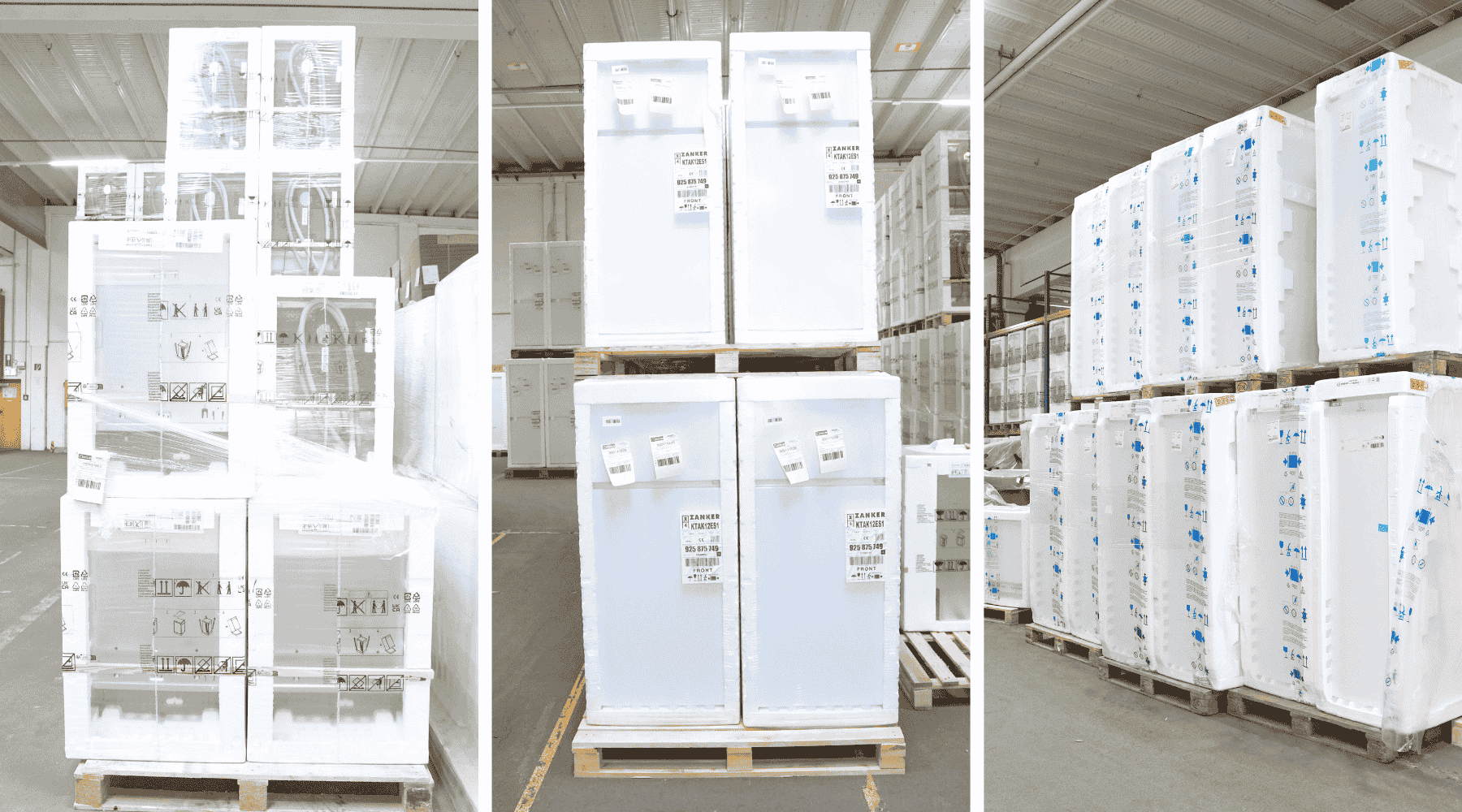
At elvinci, we not only offer you high-quality A-goods, but also a transparent and fair business model that is specially tailored to the needs of B2B retailers. While our core business is trading in returns and B-goods, we also have first-class A-goods in our range - for retailers who want to diversify their offering.
High-quality new goods from trustworthy sources
When you buy A-goods from elvinci, you are guaranteed to receive brand-new products in their original packaging. We work with certified suppliers and can verify the origin of every product. Our quality control ensures that only flawless products are included in our range.
Unlike many other suppliers, you will not receive any gray imports or products of questionable origin from us. We value transparency and traceability - from the source to your warehouse.
Fair prices through direct wholesale access
Thanks to our established relationships with manufacturers and wholesalers, we can offer you attractive purchase prices. You benefit from our purchasing volume and the associated conditions. This enables you to achieve competitive sales prices with healthy margins.
Fast delivery and flexible quantities
We understand that retailers need flexibility. That's why we don't have unrealistically high minimum purchase quantities. You can also order smaller quantities to test new products or expand your range in a targeted manner. At the same time, larger retailers benefit from our ability to deliver large quantities quickly.
Our logistics are designed to process your orders quickly and reliably. As a rule, your goods leave our warehouse within 2-5 working days.
Personal advice for B2B customers
As a B2B retailer, you have different requirements than end customers. That's why we offer you personal advice from experienced employees. Whether it's about product selection, costing or logistics - we support you in making the right decisions.
Do you have questions about a product? Do you need larger quantities at special conditions? Would you like to establish a long-term partnership? Get in touch with us. Together we will find the best solution for your business.
Successful sales strategies for A-goods
If you buy A goods, this is only the first step. How you market and sell the goods is crucial to your success. Here you can find out which strategies work and how to maximize your margins.
The best sales channels for A-goods
Choosing the right sales channel has a significant impact on your success. Each channel has its specific advantages and disadvantages.
Own online store: Your own store offers you maximum control and the best margins. You don't pay high commissions to marketplaces and can freely design your brand. However, you have to generate traffic yourself through SEO, online marketing and social media. This requires time and expertise. For specialized retailers with niche products, having your own store is ideal.
Amazon: The largest e-commerce platform in Germany offers enormous reach and trust. Customers prefer to buy from Amazon than from unknown stores. The downside: commissions of 8-15% depending on the category, intense price competition and strict guidelines. Nevertheless, Amazon is often indispensable for A-brand products. Use the Fulfillment by Amazon (FBA) program to reach Prime customers.
eBay: Still relevant, especially for used goods and B-goods. For A-goods, eBay works particularly well if you can offer lower prices than the competition. Commissions are lower than on Amazon, but buyers are generally more price-sensitive.
Stationary trade: If you have a retail store, you can sell A goods with higher margins. Customers appreciate advice, immediate availability and the opportunity to touch products. However, the fixed costs (rent, staff) are considerable. Over-the-counter retail works particularly well for products that require explanation and in good locations.
Social Commerce: Instagram, Facebook and TikTok are developing into important sales channels. You can sell directly via social media stores. This works particularly well for visually appealing products (fashion, decoration, gadgets) and if you build up an engaged community.
Marketing tips: How to position A-goods correctly
The marketing of A-goods differs fundamentally from the marketing of B-goods or remaining stock. Your message must communicate quality, trust and value.
Emphasize the new goods property: Make it clear that the goods are brand new, unused and in their original packaging. Formulate this prominently in product descriptions, titles and advertising statements. "Brand new - originally sealed" or "Brand new from authorized dealer" are strong messages.
Use high-quality product photos: A-grade goods deserve professional photos. Show the product from different perspectives, with details and in application situations. Good photos reduce returns and significantly increase the conversion rate. If the manufacturer provides product photos, use them - they are usually of high quality.
Emphasize the guarantee: A full warranty and manufacturer's guarantee are strong selling points. Communicate this clearly: "24 months full warranty + 2 years manufacturer's warranty". This creates trust and distinguishes you from dubious providers.
Create trust through transparency: Show that you are a reputable retailer. Display your legal notice and contact details prominently, show customer reviews and offer various payment methods. Trusted Shops or similar seals also increase trust.
Use content marketing: Create helpful content about your products. Guides, comparisons, instructions and videos attract potential customers and position you as an expert. A well-designed blog or YouTube channel can generate traffic and sales in the long term.
Customer communication: Conveying quality convincingly
Your communication with customers often decides whether they buy or not. With A-goods, it is important to convey quality and reliability.
In product descriptions: Write detailed, precise descriptions. List all technical data, explain functions and advantages. Answer typical questions directly in the text: "Are the original accessories included?" - "Yes, all parts specified by the manufacturer are included." Avoid advertising platitudes, focus on facts.
For customer inquiries: Respond quickly and competently to questions. If someone asks "Is this really new?", answer precisely: "Yes, it's brand-new A-goods in the manufacturer's original sealed packaging. The product has never been used or displayed." Honesty and competence create trust.
For problems and complaints: Even A-grade goods can sometimes have problems - transport damage, a manufacturing defect. Respond professionally: apologize, offer quick solutions (exchange, repair, refund) and show that customer satisfaction is a priority. Satisfied complaint customers often become loyal regular customers.
Exploiting cross-selling and up-selling potential
A-Ware offers excellent opportunities for cross-selling and up-selling, allowing you to increase your average basket.
Cross-selling (additional products): Offer suitable supplements. If you buy a coffee machine, you may need descaler, coffee or cups. If you buy a smartphone, you may need a case, protective film and power bank. Display these products prominently as "Customers also bought" or "Matching".
Up-selling (higher-value alternatives): If a customer is looking at a mid-range product, also show them the premium model. Explain the differences and the added value: "For just 50 euros more, you can get the successor model with twice the battery life and a better camera." Many customers are willing to pay more if the added value is clear.
Bundles: Combine A-goods into attractive packages. "Starter set: laptop + mouse + bag at a special price" or "Complete kitchen equipment: coffee machine + toaster + kettle with 10% discount". Bundles increase the shopping cart value and offer customers real added value.
offer warranty extensions: Offer warranty extensions for a fee. Many customers are prepared to pay for additional security. This generates additional sales with very high margins (60-80%).
Expert tip on shopping cart value: The average shopping cart value is one of your most important key figures. Even small increases of 10-15% through cross-selling and up-selling can double your profitability. Test different approaches systematically and measure the results.
Buying A-grade goods: Common mistakes and how to avoid them
Even experienced traders repeatedly make typical mistakes when trading in A-grade goods that cause costs or reduce profits. Here are the five most common problems and how to avoid them.
Mistake #1: Wrong supplier selection
The problem: Many beginners choose suppliers based solely on price. They buy from dubious suppliers with dream prices, but then receive inferior goods, counterfeits or have delivery problems.
The consequences: Legal problems with plagiarism, dissatisfied customers, high return rates, damaged reputation.
How to avoid it: Check suppliers thoroughly. Ask for references, research reviews and start with small test orders. A reputable supplier may cost 5-10% more, but will save you money and hassle in the long run.
Error #2: Inadequate storage conditions
The problem: A-goods are stored in damp cellars, unheated garages or dusty rooms. The packaging is damaged and the goods lose their A-goods status.
The consequences: Goods must be sold as B-goods with a 30-50% discount. Larger quantities quickly result in losses in the five-digit range.
How to avoid it: Invest in suitable storage space. If you do not have your own space, use professional storage service providers. The costs are amortized through the value retention of the goods.
Mistake #3: Margins calculated too low
The problem: Retailers only calculate the purchase price and sales price, but forget hidden costs. At the end of the year, it turns out that despite sales, there is no profit left over.
The consequences: Liquidity problems, risk of insolvency, burnout due to a lot of work without an adequate return.
How to avoid it: Calculate in full (see our calculation table above). Calculate pessimistically rather than optimistically. Carry out regular recalculations. Discard items that are not profitable.
Mistake #4: Lack of quality controls
The problem: The goods are delivered directly from the wholesaler to our own warehouse without any incoming goods inspection. Damage or incorrect deliveries are only noticed when customers make a complaint.
The consequences: Complaint costs, negative reviews, disgruntled customers, stress.
How to avoid it: Check every delivery immediately upon receipt. Document defects photographically and complain to the supplier immediately. Check the stock on a random basis.
Mistake #5: Unclear product descriptions
The problem: Product descriptions are too short, incomplete or misleading. Customers order, do not receive what they expected and return the product.
The consequences: High return rates of 15-20% instead of 3-5%, negative reviews, falling conversion rate.
How to avoid it: Write detailed, precise descriptions. Use high-quality photos from different perspectives. Answer frequently asked questions directly in the text. List all technical data.
Expert tip
Analyze your returns systematically. Ask customers why they have returned items. Patterns often emerge (incorrect sizes, missing information, unrealistic photos) that you can rectify.
Frequently asked questions about A-goods
Are A-goods always brand new?
Yes, A-goods are by definition always brand new and unused. The goods have not been tested or used and are in the original sealed manufacturer's packaging. In addition, all accessories, instructions and warranty documents are included. As soon as the packaging has been opened or the product shows signs of use, it is no longer an A-good, but at least a B-good.
How do I recognize genuine A-goods when shopping?
You can recognize genuine A-goods by several characteristics: The original packaging must be completely sealed and undamaged, with the manufacturer's seal and safety sticker intact. In addition, no traces of opening, adhesive residue or damage should be visible. Furthermore, the product itself must not show any scratches, fingerprints or other signs of use. All protective films and transport protection devices are still present. Ask the wholesaler for proof of the origin of the goods.
Which sectors mainly trade in A-goods?
A-goods are traded in almost all sectors, although some areas are particularly dominant. The electronics trade with smartphones, laptops and household appliances relies almost exclusively on A-goods. The fashion industry also trades predominantly in new, unworn goods from the latest collections. Furniture retailers, toy stores and sporting goods retailers are also classic A-goods sectors. You will find A-goods wherever customers expect new goods and are prepared to pay full price for them.
Can display items be sold as A-goods?
No, display items are not considered A goods, even if they have never been sold. The presentation in the salesroom inevitably results in slight signs of use - the goods have been touched and tested. In addition, the original packaging is usually missing or damaged. Display items must be declared as B-goods and sold at reduced prices. You should communicate transparently that these are former display items in order to avoid legal problems.
What warranty do I have to offer as a retailer for A-goods?
In the B2C sector, the full statutory warranty of 24 months from the date of purchase applies to A-goods. You are liable for the first six months under the reversal of the burden of proof - you must prove that a defect was not already present at the time of purchase. In addition, the manufacturer's warranties apply in full, which often offer additional benefits over and above the statutory warranty. Buyers of A-goods therefore enjoy maximum protection and can demand repair, replacement or a reduction in price in the event of defects. In the B2B sector, you can make different agreements.
Are there quality differences within A-goods?
There are no official quality gradations within the A-goods category - either a product meets the A-goods criteria or it does not. However, there may be differences in the date of manufacture or model generation. Newer production batches may have minor improvements, but these do not affect the A-goods classification. In addition, branded products differ from no-name items in terms of overall quality, but both remain A-goods as long as they are brand new and in perfect condition.
How long can A-goods be stored?
In principle, A-goods retain their status indefinitely as long as the original packaging remains sealed and undamaged. However, technical products can lose value due to prolonged storage when newer models come onto the market. In the case of electronics, the batteries should be checked regularly as they can be damaged if stored for long periods. A maximum storage period of 12-24 months is recommended for most product categories to avoid loss of value due to technological obsolescence.
What are typical purchase prices for A-goods?
Purchase prices from wholesalers are typically 50-70% of the RRP, depending on the product category. Electronics are usually at 60-70%, fashion at 40-60% and household appliances at 55-65% of the RRP. The larger your purchase quantity, the better conditions you can negotiate. If you purchase directly from the manufacturer (from very large quantities), prices of 40-55% of the RRP are possible, but with very high minimum purchase quantities.
Do I need a business to buy A goods?
Yes, for the commercial purchase of A-goods from wholesalers you generally need a registered business. Wholesalers only sell to commercial customers (B2B) and require a trade license and a VAT identification number. Business registration is straightforward and costs 15-60 euros, depending on the municipality. As a trader, you can then claim input tax and benefit from B2B conditions.
What is the difference between A-goods and new goods?
The terms A-goods and new goods are essentially synonymous. Both refer to brand-new, unused products in their original packaging. The term A-goods is mainly used in B2B trade to differentiate the goods from B-goods and C-goods. New goods is the more general term, which is also commonly used in the end customer business. In practice, there is no difference - both terms guarantee you an unopened, flawless product with full warranty claims.
Conclusion: buying A-grade goods as the foundation for successful trading
When you buy A-Goods and trade professionally, you lay the foundations for a successful, sustainable trading business. The high product quality, full warranty claims and customer trust make A-goods the preferred choice in regular retail. Although the margins are somewhat lower than for B-goods, you benefit from faster sales cycles, lower return rates and significantly lower costs.
Purchasing through established wholesalers also gives medium-sized retailers access to high-quality A goods without having to meet the manufacturers' enormous minimum purchase quantities. They benefit from additional services such as warehousing, flexible payment terms and fast delivery times. Establishing long-term partnerships with reliable wholesalers is a key success factor - better conditions, preferential treatment and planning security are the result.
A-goods are particularly worthwhile for retailers who value brand image, customer satisfaction and legal security. Regular retailers, brand stores and quality-oriented online retailers fare best with A-goods. The target group is large, the sales speed is high and planning is excellent. On the other hand, outlet stores and specialty retailers may be able to achieve higher margins with B-goods, but also bear significantly higher risks and expenses.
The success factors for A-goods trading are clear: careful supplier selection, complete calculation of all costs, professional storage, legally compliant processing and convincing product presentation. If you pay attention to these points, nothing stands in the way of your success.
The market for A-goods remains stable and will continue to be the dominant form of goods in retail in the future. Digital sales channels and online marketplaces continue to gain in importance, while bricks-and-mortar retailers can score points with personal advice and services. Transparency and sustainability are becoming more important - customers increasingly want to know where products come from and under what conditions they were produced. Retailers who make their supply chains transparent and rely on certified wholesalers will be the most successful in the long term.
Ready to get started with A-goods? With elvinci you will find high-quality new goods at fair B2B conditions.